If you frequently find yourself reaching for your smartphone without knowing why, you are experiencing the modern default state. We live in an era where checking notifications, scrolling through feeds, and refreshing inboxes takes up hours of our daily lives. For many, this constant digital noise leads to burnout, brain fog, and a lingering sense of distraction.
Understanding the digital minimalism meaning is the first step toward taking back control of your time and focus. This philosophy is not about throwing your laptop in the trash or living off the grid. Instead, it is a framework for deciding which digital tools actually add value to your life and which ones are merely stealing your attention.
What is Digital Minimalism?
To begin adopting this lifestyle, we must first clearly define what it entails.
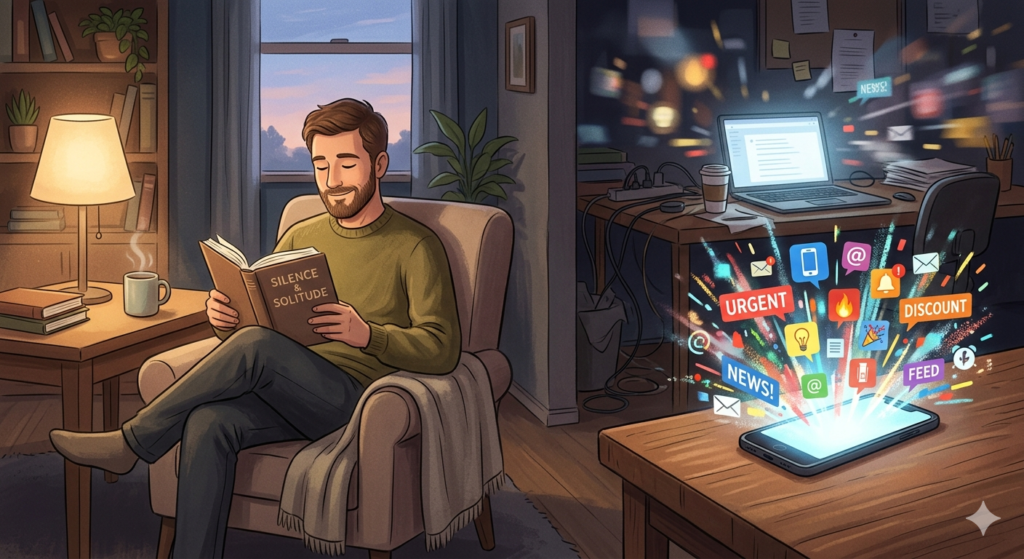
Digital minimalism is a philosophy of technology use where you intentionally focus your online time on a small number of carefully selected activities that strongly support the things you value, and happily miss out on everything else.
It is a rejection of the idea that any minor benefit justifies allowing an app or device into your daily routine. Instead of asking, “Is this app slightly useful?” a digital minimalist asks, “Is this the absolute best tool to support my core values?”
Escaping the Attention Economy
To understand why this philosophy is necessary, we have to look at how modern technology is designed. We currently live in an “attention economy.”
In this economic model, your screen time is the product being sold to advertisers. Social media platforms, news aggregators, and even email clients employ teams of behavioral psychologists to make their products as addictive as possible. They use variable rewards, infinite scrolling, and notification badges to keep you engaged.
Many people try to combat this with a weekend “tech detox.” While taking a break is helpful, a temporary detox usually fails in the long run. Once the weekend is over, you return to the exact same addictive algorithms. Digital minimalism offers a permanent structural change rather than a temporary vacation.
The Core Principles of Intentional Tech Use
Adopting this lifestyle requires a shift in how you evaluate the tools in your life. The philosophy is built on three foundational principles.
1. Clutter is Costly
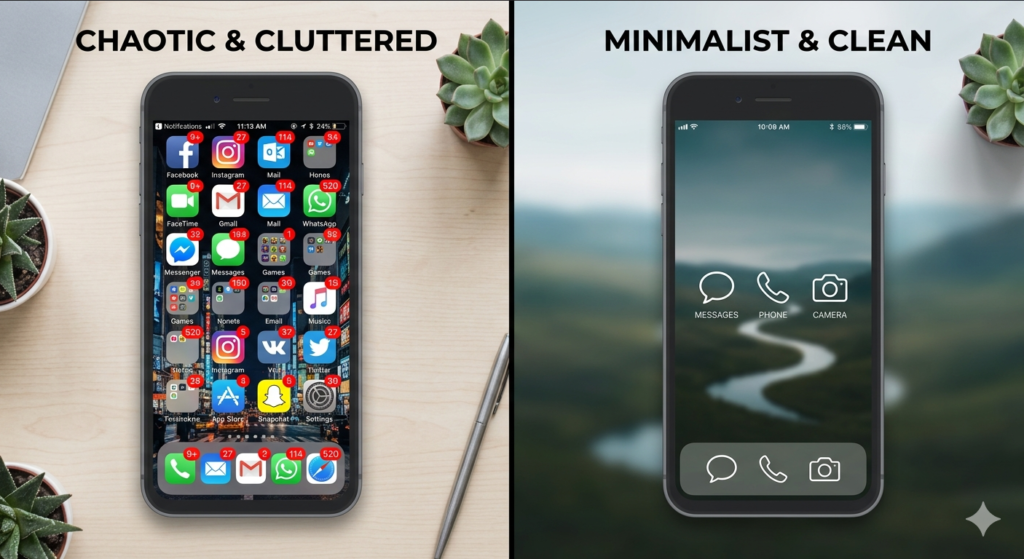
Having dozens of apps, subscriptions, and devices spreads your attention too thin. Even if an app offers a small benefit, the cognitive cost of managing it often outweighs that benefit. A minimalist prefers a clean, uncluttered digital environment.
2. Optimization is Crucial
Deciding to use a technology is only the first step. You must also decide how you will use it. For example, a digital minimalist might decide to use a social media platform to stay in touch with family, but they will optimize the experience by deleting the app from their phone and only logging in from a desktop browser on Sunday afternoons.
3. Intentionality is Satisfying
Passive consumption leaves us feeling empty. Active, intentional use of technology—like learning a new skill, creating art, or having a meaningful conversation—brings deep satisfaction. This is the cornerstone of intentional living in the digital age.
Cal Newport and the Deep Work Connection
The term was heavily popularized by computer science professor Cal Newport. His work explores the intersection of technology, culture, and cognitive focus.
Newport argues that navigating the modern workplace requires the ability to concentrate without distraction—a concept he calls “deep work.” Unfortunately, the constant pings of Slack, email, and social media force our brains into a state of shallow, fragmented attention.
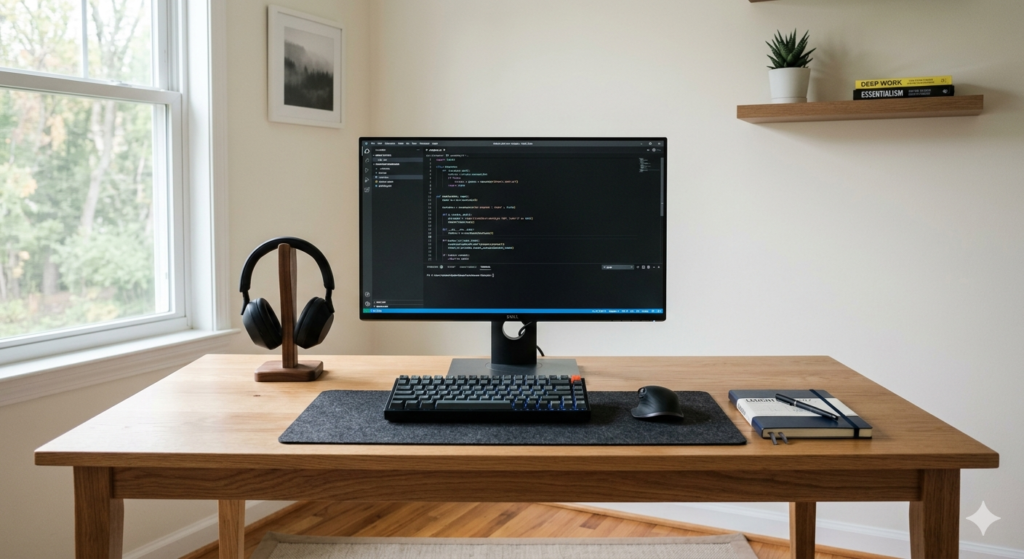
To rebuild your capacity for intense concentration, structuring your environment to eliminate these distractions is essential. If you are looking to understand the mechanics of this focused state and how to apply it to your career, reading “Deep Work” by Cal Newport (Book) is an excellent starting point. It provides actionable strategies for training your brain to focus in a distracted world.
Conclusion
Understanding the digital minimalism meaning allows you to shift from being a passive consumer of technology to an active director of your own attention. It is not an anti-technology stance; rather, it is a pro-intentionality stance.
By recognizing the traps of the attention economy and optimizing the tools you allow into your life, you can reclaim your time, reduce digital anxiety, and focus on the activities that genuinely matter to you.
Frequently Asked Questions (FAQ)
1. Is digital minimalism just deleting all social media?
No. While some minimalists choose to delete social media entirely, the philosophy is about intentional use. If an app provides significant value to your life, a minimalist will keep it, but they will establish strict rules around when and how they use it to prevent mindless scrolling.
2. How long does it take to become a digital minimalist?
Many practitioners start with a 30-day “digital declutter.” During this month, you remove all optional technologies from your life to break the cycle of addiction. After 30 days, you slowly reintroduce only the tools that pass a strict value test.
3. Can I practice digital minimalism if my job requires me to be online?
Absolutely. Digital minimalism in the workplace involves optimizing your workflow. This might mean batch-processing your emails twice a day instead of keeping your inbox open constantly, or using website blockers during hours when you need to focus on complex tasks.
4. Why do digital minimalists like E-Ink devices?
E-Ink devices (like digital notepads or e-readers) are highly favored because they are single-purpose tools. They allow you to read or write without the temptation of opening a web browser, checking email, or receiving push notifications, naturally supporting a distraction-free environment.